Pay in installments of $7.33 with
 ,
,
 and
and

Shipping Estimate
USA
- USA
- CAN
- USA
- CAN
Ships within 48 hours · Estimated delivery Jun 29 - Jul 4
 Promo Codes Available:
For Your Every Summer RSVP, with Code: SUMMER15
Description
philodendron pseudoverrucosum Philodendron pseudoverrucosum – Velvet Leaves with Speckled PetiolesPhilodendron pseudoverrucosum Rare Velvet Species with Iridescent Foliage Pseudoverrucosum' Philodendron Velvet Texture, Leaf Glow and Collector Appeal Philodendron pseudoverrucosum is a recently described species (Croat, sp. nov.) and one of the most striking velvet leaved aroids available to collectors. Its broad, heart shaped leaves are dark green with a velvety surface and shimmering, light catching sheen. The prominent silver venation forms a
Philodendron pseudoverrucosum – Rare Velvet Species with Iridescent Foliage
Pseudoverrucosum' Philodendron – Velvet Texture, Leaf Glow and Collector Appeal
Philodendron pseudoverrucosum is a recently described species (Croat, sp. nov.) and one of the most striking velvet-leaved aroids available to collectors. Its broad, heart-shaped leaves are dark green with a velvety surface and shimmering, light-catching sheen. The prominent silver venation forms a distinct contrast that becomes even more intense under indirect light. With age, each leaf can develop light iridescence and subtle color shifts depending on humidity and angle.
This climbing philodendron behaves similarly to its relative Philodendron verrucosum but lacks the hairy petioles – making it easier to manage indoors without shedding. A must-have for collectors chasing unusual velvet textures and newly described species.
Visual characteristics and form
- Leaf shape: Broadly cordate (heart-shaped) with defined sinus
- Texture: Soft velvet surface with iridescent overlay
- Venation: Pale to silver midrib and lateral veins
- Growth pattern: Climbing with elongated internodes and aerial roots
- Indoor size: Can reach 1.2 – 1.8 m in height with vertical support
Scientific background and growth behavior
Philodendron pseudoverrucosum was officially described by botanist Dr. Thomas Croat and is native to Ecuadorian cloud forests. It thrives in moist, filtered-light habitats at mid to high elevation, where rainfall and humidity remain consistently high. Unlike Philodendron verrucosum, its petioles are smooth (not hairy), and the iridescence of the leaves is more variable depending on maturity and light. Like most aroids, it is toxic to pets and humans if ingested.
Philodendron pseudoverrucosum care guide
- Light: Bright, indirect light – avoid direct sun to protect velvet texture
- Watering: Keep soil lightly moist, not soggy – allow top layer to dry slightly
- Humidity: Prefers 70%+ – essential for leaf expansion and iridescence
- Temperature: Best between 18 – 26 °C; avoid rapid drops in temperature
- Soil: Loose, well-draining aroid mix with bark, perlite, and sphagnum moss
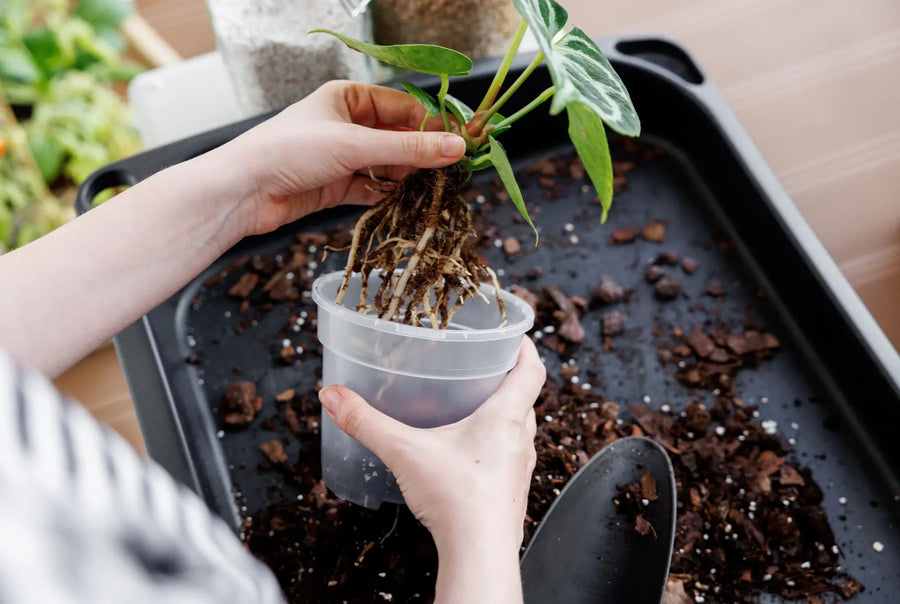
- Repotting: Every 1 – 2 years or when roots circle the container
- Fertilising: Feed monthly during growth phase with diluted liquid fertiliser
- Propagation: Via stem cuttings with nodes and aerial roots
- Hydroponics: Can adapt to semi-hydro with consistent humidity and warmth
- Pruning: Remove old leaves or trim vines to control height
Common issues and easy fixes
- Velvet leaves turning dull: Caused by dry air or low light – boost humidity and lighting
- Brown edges: Often due to inconsistent watering or mineral-heavy tap water
- Pale leaves: May indicate nutrient deficiency – feed gently and regularly
- Pests (thrips, mites): Monitor closely – use neem oil or insecticidal spray early
- Root rot: Use breathable soil mix and water only when needed
Extra tips for healthy growth
Use a moss pole or coir stick to encourage upright growth – aerial roots will anchor and help the plant mature faster. Keep humidity steady and use filtered water to prevent buildup that can affect the velvet surface. Rotate gently to keep the leaves symmetrical. Patience is key with this species – it rewards slow care with truly spectacular foliage.
Etymology and scientific naming
The genus name Philodendron comes from Greek – “philo” meaning love and “dendron” meaning tree – referring to its climbing nature. The species name pseudoverrucosum literally means “false verrucosum,” referencing its close resemblance to Philodendron verrucosum but with clear morphological differences. It was described by botanist Thomas Croat as a new species (sp. nov.) following detailed taxonomic review.
Shipping Notes
- Free Standard Shipping on $100+ Orders to the USA.
- Except Preorder products are shipped in 48 hours.
- Delivery to the USA:
- Standard Shipping : 3-10 business days
- If time is of the essence, please consider selecting expedited delivery for faster service.
Exchange/Return Notes
- We offer a 30-day return/exchange service after receiving.
- Final sale items are not eligible for returns or exchanges.
- To process your return/exchange, please contact us at [email protected]
- Please click here for more details>>> Return & Exchange Policy